
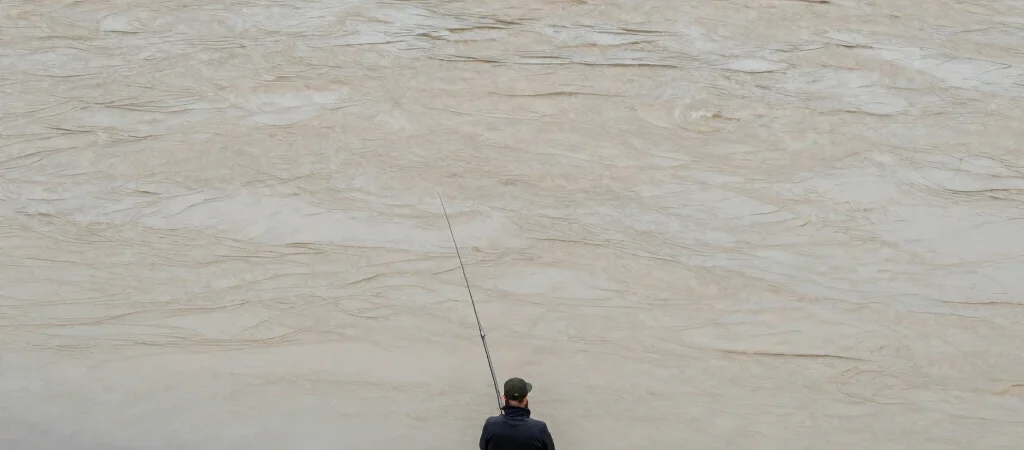
You can see fishable water from the road and still have no good place to stand. Before rigging up, take a few minutes to check where access is permitted, how the bank meets the current, and whether the water is safe to approach.
Start With Legal Access
Look for posted boundaries, designated access points, and any local rules that apply to the water. A public road beside a river does not automatically make the riverbank public, and access can change from one parcel to the next.
If a parking area or trail leads to the water, stay on established routes where possible. That makes it easier to avoid trespassing and reduces the chance of widening muddy paths through vegetation.
Watch the Water First
From a safe position, look for seams where faster current meets slower water, deeper edges beside shallow runs, and places where current passes around a stable structure. These features can help you decide where a presentation might travel naturally; they are clues, not promises of a bite.
Check the flow and the footing before stepping closer. Rising water, slick rocks, undercut banks, and fast current can turn a familiar-looking stretch into a poor place to wade. If the approach feels uncertain, fish from shore or choose another access point.
Leave the Bank Usable
Keep your gear compact enough to move without brushing through streamside plants, and pack out line, bait containers, and other waste. A useful spot is one you can fish responsibly and leave in good shape for the next person.
